Paint protection film has matured from a clear bra on bumper corners to a precision product that can transform an entire vehicle. The leap came from two directions. First, film chemistry improved, with self-healing topcoats, hydrophobic surfaces, and clearer adhesives that avoid orange peel. Second, software-driven pattern libraries exploded, letting installers cut exact shapes for body panels without touching a knife to paint. Between those two shifts lies the real art: matching the right PPF approach, precut or custom, to the car in front of you.
This is not a one-size decision. A highway commuter with a new compact doesn’t have the same risk profile or budget as someone with a hand-built bonnet and wafer-thin clearcoat. After years watching films stretch, tack, and relax across curved metal, I’ve learned how to choose among patterns, bulk installs, and custom wraps in a way that respects the vehicle and the owner’s goals. The choices you make upstream, before water hits the panel, determine how the film ages and how the car looks three years from now.
What pattern libraries actually cover, and where they fall short
The best pattern libraries catalog hundreds of thousands of parts across makes and model years, often broken down by trim and sensor packages. A strong bumper kit will include parking sensor cutouts, headlamp washer holes, radar windows, and tow hook openings. Hood and fender patterns often carry edge reliefs that roll an eighth to a quarter inch under the panel line. Mirrors, A-pillars, rocker panels, door cups, even the lip behind a rear wheel can be in the library.
That sounds exhaustive, and it usually is for mainstream vehicles. Where it falls short is in the real world. Factory tolerances drift, dealership add-ons change the contour map, and the bumper a library team scanned in April may not match the production change that hit in June. Repaints add film thickness and nibs at panel edges. Aftermarket aero, thicker paint correction passes, or a ceramic coating applied before PPF will alter surface energy and stretch behavior. A perfect pattern on paper can fight you at the corners if the car in the bay isn’t the same as the car on the screen.
This is where a seasoned installer reads ahead. You dry-fit without fluid to test the perimeter, then flood the panel and see what the film wants to do. On tight radius corners, you may trim an anchor notch outside the view area to relieve tension. On flat hoods, you can let the film relax for a minute after the initial tack to reduce residual stress. The pattern is a starting point, not an absolute truth.
Where bulk film and custom wraps make more sense
A custom wrap means applying from bulk film, then trimming by hand on the car. It scares people who imagine a blade against fresh paint. The truth is more nuanced. With the right angle, a soft blade, and protection under the film lip, you can make relief cuts without touching clearcoat. Is that suitable for every shop? No. It demands training, calm hands, and a refusal to rush. But for certain panels, bulk is the better tool.
Front bumpers with deep compound curves, vintage cars with loose tolerances, and hoods that need full edge wraps often benefit from bulk. Aftermarket carbon lips and splitters rarely match any library pattern. Even on mainstream cars, if the client wants a no-line hood where the film disappears over the edge and tucks far under the panel, a bulk piece avoids the small seam you may see with some patterns.
I have a mental rule. If the panel has more than three tight convex-to-concave transitions within two feet, or if an edge line falls close to a viewable chamfer, I consider bulk. If the car lives above 70 miles per hour often and the owner notices micro seams, bulk wins more often than not. If the vehicle has fragile repainted edges, I weigh the risk. Sometimes a hybrid approach is best, pattern for the center with a custom extension at the leading edge.
Integrating PPF with paint correction and ceramic coating
Everything starts with the paint. Even new vehicles arrive with light marring, factory sanding marks, or dealer-installed swirls. Paint correction before film is not vanity, it is necessity. Film will lock in whatever lies beneath. Over-correcting is a risk too, especially on softer clearcoats that can develop haze if you chase every faint mark. A measured single-step correction for a new car, or a two-step for a moderately marred finish, sets a clean foundation without thinning the clearcoat unnecessarily.
The timing of ceramic coating matters. I avoid applying a full coating under PPF. High-slickness ceramics reduce adhesive wet-out, which can lead to lift lines, trapped slip solution, or micro-silvering in tight valleys. A better sequence is correction, PPF install, then coating on top of the film and on the exposed paint. Many ceramic coating systems bond well to modern PPF topcoats and improve water behavior along with cleaning ease. Some manufacturers even supply film-specific toppers. If the hood is wrapped and the roof is bare, treating both with the same ceramic helps maintain a uniform look and wash feel.
Window tinting comes into the picture as part of the protection envelope. Grooming a car’s surfaces is not compartmentalized. Heat rejection from tint reduces cabin UV and IR load, which helps leather, plastics, and even dash adhesives over time. It does nothing directly for the paint, but a client who understands total vehicle care tends to keep washing tools clean, which in turn keeps the PPF and paint swirl-free longer. The best auto detailing is holistic, not performed as isolated tasks.
How Advanced Detailing Sofla builds a pattern-first, custom-ready workflow
At Advanced Detailing Sofla, the starting point is a detailed assessment. If the vehicle is high-volume and current model year, we begin with a trusted pattern and print test pieces for weak spots. We check proximity to radar sensors, integrate tow hook circles if needed, and map washer caps. For a recent mass-market sedan, the library patterns often fit with millimeter accuracy. Film tension is controlled with anchor points we know from experience will not telegraph after cure.
If the car has quirks or the owner requests edge wraps beyond what the kit supports, the team shifts to hybrid. We will extend patterns at critical edges or trim a bulk extension to eliminate a seam that would land in a high-pressure spray zone. In one case on a Euro hot hatch with a sharp bumper crease, we added a two-inch custom underlay auto detailing behind the crease to allow tension to split across layers rather than creep toward the visible edge. Three years later, that panel still reads seamless under bright shop lights.
The shop treats post-install inspections with the same seriousness as prep. We return the car within 24 to 48 hours for a check, not because film magically fails on day two, but because small edges relax as moisture evacuates. Most issues, like a micro-lift at a parking sensor ring or a tiny water bubble at the bottom of a rocker, can be addressed quickly if we catch them early. This discipline separates clean installs from great installs.
Precision cutting without paranoia
Plotters changed the industry. With a sharp blade, proper offset, and the right downforce, you can cut film cleanly without burring the topcoat. The mistake many make is over-cutting corners or forcing too much relief into tight arcs. If a pattern calls for a sharp inner corner, I sometimes hand round it by a millimeter on the software side to reduce the likelihood of a peel point later. Tiny adjustments like that pay dividends.
On-car trimming has its place, and safe technique looks like this. Keep the blade inside the lubricated film edge, not on paint. Pull the film up and away at a low angle so the cut happens against the film’s adhesive, not down against the panel. Use painter’s tape under very delicate edges if you must, then remove and clean adhesive residue. Work calm, never fight a corner. If film battles you, back up, re-wet, and reset the anchor. Speed here is not a virtue.
Coverage strategies: partial, full front, or full body
The least coverage that makes sense is usually the high-impact zone. That means bumper, hood leading section, front fenders forward of the wheel arch, and mirror caps. Rocker panels, A-pillars, and the roof edge line above the windshield are also worth considering. For highway commuters behind dump trucks, a full front makes more sense. Those who run mountain roads with a lot of grit benefit from wrapping rocker panels and rear wheel impact areas.
Full body wraps are for owners who want uniform gloss, consistent maintenance, and near elimination of chip worries. They demand more film, more time, and more planning. You must think about disassembly for tight tucks, how door handles and badges sit, whether to pull beltline trim, and how to manage panel gaps. If you are not comfortable removing and reinstalling trim to OEM torque values, build a plan that protects edges without disassembly. There is no shame in a micro-seam in a hidden recess if the alternative is cracked plastic or rattles.
A full wrap pairs nicely with a ceramic coating on top. Maintenance becomes straightforward. Wash with a pH-neutral soap, use clean mitts, and dry with soft towels or air. The difference in contamination pickup is tangible. Film with a decent topcoat and a ceramic will shed tar and rubber marks more easily after track days or long road trips.

What can go wrong and how to prevent it
Silvering at tight edges is the most common aesthetic issue. It appears as a faint gray line where micro air remains in the adhesive. Prevention starts with good surface prep and a slip solution that balances glide and tack. On sharper edges, switch to a tackier solution, add heat judiciously, and squeegee with firmer pressure in short strokes from the edge inward. If the paint has micro-chips at the very edge, no film will sit perfectly. Sometimes the fix is to feather the edge with a paint touch-up and polish before film.
Lift at sensor bezels and washer doors stems from differing coefficients of expansion. Plastic rings move more than painted steel. Cutting patterns that relieve tension around those components prevents creeping lift. In other cases, adding a small pre-stretch and then letting the film relax for a minute before final squeegee avoids pent-up tension that wants to pull away later.
Adhesive lines, commonly called stretch marks, come from yanking film too far in a narrow band. Learn to spread your pulls across larger areas. If you need to persuade a tight radius, warm the area, then push the mass of the film, not just the corner, toward the curve. If you see an adhesive line forming, stop. Re-wet, cool slightly, and approach again with a gentler stretch.

Contamination under film is a different class of problem. Even a single fiber can show as a tiny pip when light hits at a low angle. Two tactics help. First, plan your water and squeegee paths so you push debris away from critical zones before the film lands. Second, use a clean-room mindset. Fresh gloves, fresh towels, and a dust-controlled bay matter. You win this battle before you open the film box.
Why Advanced Detailing Sofla favors a consultative map, not a menu
Advanced Detailing Sofla looks at each car as a blend of driver habits, paint condition, and design. A roadster driven top-down along the coast will collect different damage than a commuter that sits behind trucks in a construction corridor. So the shop maps risk zones to coverage options rather than pitching a generic kit. A client with a performance SUV who tows bikes on weekends got full-coverage rockers, rear bumper top protection, and a strong front-end package, but left the roof bare to keep budget and install time reasonable. That blend keeps value high and maintenance simple.
Because the team also handles car detailing and ongoing maintenance, they see how PPF ages in the wild. They know which door edges get kicked by kids, which trunk lips collect luggage scuffs, and which gloss blacks on B-pillars scratch if you look at them wrong. That feedback loop shapes pattern selection, custom add-ons, and where to reinforce beyond what the library suggests. This is not theory. It comes from months of watching how a film looks after harsh sun, repeated washes, and an accidental brush with a shopping cart.
Pattern choices for special cases: matte paints and exposed carbon
Matte and satin paints need their own playbook. You cannot polish out a scratch, so PPF is almost mandatory if you want to preserve the finish. Films designed for matte surfaces carry a flat topcoat that matches the sheen. Pattern edges show more readily on matte because light scatters differently. Full panel coverage is preferred to avoid visible edge ghosts, and bulk wrapping an entire hood rather than a partial cut can make the difference between seamless and obvious.
Exposed carbon on mirrors, roofs, or splitters brings two challenges. First, it is usually clear-coated but can be thinner than body paint. Second, the weave pattern acts like a lens, which magnifies silvering if air is trapped. Use smaller squeegee strokes, a cleaner tack solution toward edges, and more time to let the film bed before final passes. Where patterns include sharp corners on carbon pieces, a small radius adjustment often leads to better long-term stability.
How window tinting and interior detailing complement a PPF investment
When someone commits to PPF, it signals they care about keeping the car crisp. Adding thoughtful window tinting keeps UV off the cabin and balances the look. Films with a ceramic or nano-ceramic construction deliver significant IR rejection without the hazy look of older dyed tints. That means the steering wheel and shift knob stay cooler, plastics age slower, and interior detailing intervals stretch out because grime bakes in less firmly.
Auto detailing habits change too. You learn to rinse more, touch less, and use soaps that flush rather than strip. With PPF and a ceramic coating on top, aggressive clay and heavy solvents are rarely needed. A decon wash once or twice a year, foam, two-bucket mitt wash, and a gentle topper spray to maintain slickness will keep the car feeling new. The less you abrade the surface, the longer both the paint and film look right.
The economics of protection: when to spend, where to save
Not every panel needs film. If a car lives in the city, parallel parks daily, and fights more door dings than rock chips, consider allocating budget to door edges, beltlines, and bumper corners rather than a full hood. If the vehicle is leased, focus on damage zones that will trigger turn-in penalties. For owners who plan to keep a car long term, a strong front package plus rockers and high-wear areas usually pays back in preserved paint value and pride of ownership.
Film thickness matters less than many think. Most top-shelf PPF sits around 7 to 8 mils of polyurethane plus adhesive layers. Heavier films marketed as 10 mil can be harder to wrap on tight radii and may show more edge bulk. The topcoat quality and adhesive clarity matter more to daily appearance, especially on dark colors that reveal orange peel and adhesive distortion. Ask to see a car that has lived six months in the sun with the film the shop recommends. Your eye will tell you more than a spec sheet.
Case notes from the bay: where patterns and custom wraps meet reality
An owner brought in a two-year-old performance coupe with a reshaped bumper from an aftermarket grille. The library had a pattern for the OEM bumper only. We started with that to map anchor points, then used bulk film for the lower third to accommodate the altered airflow ducting. By overlapping the bulk section under the seam line of the grille, we hid the transition. The customer returned a year later after several track days, with rubber marks on the film that wiped away easily. Without bulk, that lower corner would have puckered or telegraphed a cut.
Another job involved a luxury SUV with a fragile satin black roof. The pattern existed, but the edges ran close to roof channels that tend to hold moisture. We extended the edges in software and used a firmer squeegee with a steeper angle to chase water out of the channels. Two days later, a tiny bubble reappeared near a shark fin. Catch-and-cure visit, a heated needle vent done within the adhesive matrix, not to paint, and it vanished. That tiny bit of aftercare kept the finish perfect.
Working environment and tools that actually matter
You expect a plotter, quality squeegees, and slip solutions. Less obvious is how much clean air and good lighting improve results. A bay with filtered air cuts debris by a noticeable margin. Overhead lighting at two color temperatures, roughly 4000K and 6000K, helps you see both warm and cool reflections, which reveals different types of edge lift and contamination. A heat source with adjustable output is essential. Overheating can gloss the topcoat in a spot or stretch the film permanently out of shape.
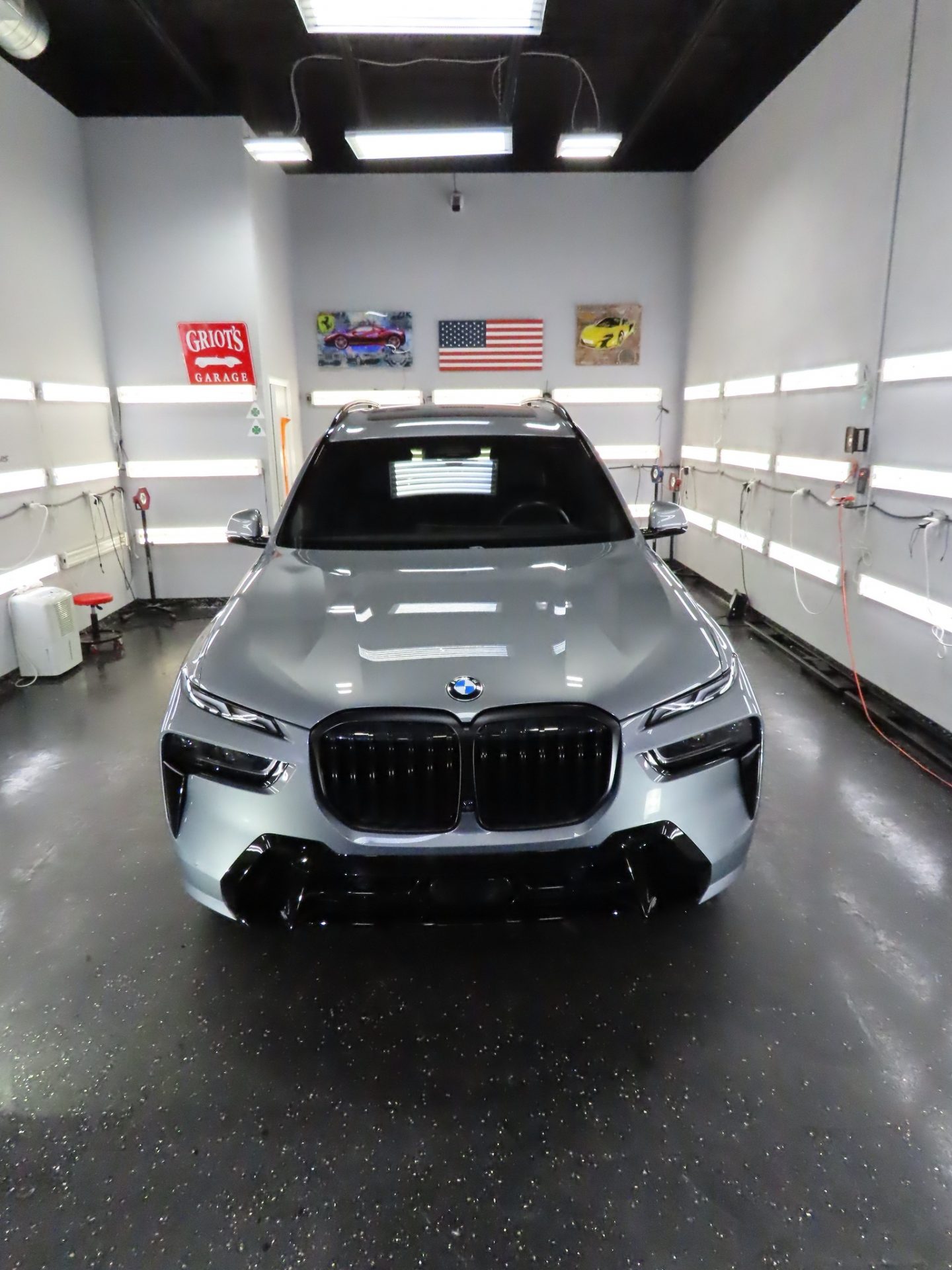
Small things add up. Sprayer tips that deliver a consistent mist maintain wet-out. Clean, soft edge squeegees reduce micro-marring of soft topcoats. A dedicated set of tools for matte films prevents gloss transfer. A painter’s mindset, where you prep 80 percent of the time and install 20, applies directly to PPF.
Training the eye: when a seam is acceptable and when it is not
Purists will say every edge must wrap and every seam is a failure. That sounds good online, but in the bay, you face compromises. On some panels, a deep wrap puts too much stress on a brittle, repainted edge. In that case, a micro-seam set back in a recess is safer and invisible unless the light is harsh and the angle perfect. Conversely, a seam on a hood within the central viewing cone will catch the eye forever. Spend the time and film to avoid that one.
An installer learns to predict where water will dry slowly and where the human eye will wander naturally. You also learn to say no. If a customer insists on a bulk wrap across a complex textured plastic where film will never hold happily, a professional declines the work or adjusts the plan. Skill is not only in the hands, it is in the judgment to choose battles you can win.
How Advanced Detailing Sofla integrates PPF with long-term care
Because Advanced Detailing Sofla also manages ongoing maintenance, their guidance includes wash plans, periodic inspections, and refresh strategies. A six-month check to evaluate edges, high-impact zones, and hydrophobic behavior lets them reset expectations and catch wear early. If a rocker takes a direct gravel strike and gouges the film, that piece is replaced, not ignored, because leaving a torn section invites lift. If the ceramic topper loses water behavior, they reset it during a maintenance detail.
They bring the same thoughtfulness to related services. A client who left with a tailored PPF package returned for window tinting that met legal limits while improving IR rejection. Another added a ceramic coating across paint, film, wheels, and calipers so brake dust and road grime wipe clean without strong chemicals. These touches round out the protection story without turning the car into a garage queen. The goal is to drive and enjoy, not polish away weekends.
Putting it together: a practical roadmap for your car
If you stand in front of your car and wonder where to start, look for the places that catch the most air and debris. The leading edges, the lower rockers behind the front tires, the mirrors, and the A-pillars. Decide how much you notice seams and how much you value a full edge wrap. Balance your budget so the high-risk zones get the best coverage, then choose whether to extend protection across the entire front or the entire body.
Fold in paint correction as a measured step, not an obsession. Decide on a ceramic coating after the film goes on, to keep maintenance light and appearance consistent. If you tint windows, select a film with strong heat rejection that still looks clear enough to see traffic at night. Tie all those choices to how and where you drive, not to what looks good on a menu.
The craft of PPF patterns and custom wraps lives in the middle space between software and steel. Good pattern libraries save time and paint, and smart custom work solves the corners that software cannot. When those pieces meet, the result is a car that stays fresh through years of sun, grit, and miles, and a driver who notices the absence of chips more than the presence of film. That is the quiet victory of well-planned protection.